Wednesday, August 4, 2010
N is for ???
Well, I am embarrassed to say that after flipping through my lists of books that I've read over the last several years and scouring my bookshleves at home, I have never read any historical fiction who's title begins with the letter N nor have I read anything by an author with a last name that begins with N. I'm going to have to remedy that and come back to this one! Meanwhile, you can check out what others who are doing the Challenge have read at Historical Tapestry's alphabet challenge.


Wednesday, June 9, 2010
M is for Mademoiselle Boleyn
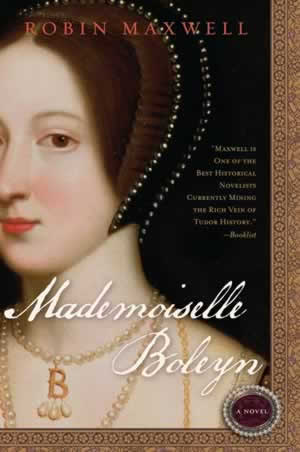
One of the best things about this book is the fact that it focuses on Anne's life before she met Henry, so it's like the reader is able to see a different side of her. Maxwell makes Anne so accessible that by the end of the book, you feel like you know her. I loaned this book to my sister-in-law, and she asked me to get her more like this one!
Friday, May 21, 2010
Summer Reading Begins Again!
It's time for the Summer Reading Program at my library which means two months of promoting reading to kids. Who could ask for a more fun job? This means that I will be staffing the SRP desk an hour a day, so I'm back to my challenge of reading all the Caldecott books. So far just this week, I have read about 10, (there are 72 in all) so I think I will be able to complete my challenge by the end of July. Yeah!
Other than that, I have a busy couple of weeks of reading ahead of me. I have three books to read and review for Historical Novels Society by June 15th. Next week is our staff book discussion on Literary Fiction. I am going to try and read The Stranger by Albert Camus and Beloved by Toni Morrison for the discussion. Hopefully I will have time. I had 14 holds come in for me all at the same time, so I have quite a pile to wade through!
Other than that, I have a busy couple of weeks of reading ahead of me. I have three books to read and review for Historical Novels Society by June 15th. Next week is our staff book discussion on Literary Fiction. I am going to try and read The Stranger by Albert Camus and Beloved by Toni Morrison for the discussion. Hopefully I will have time. I had 14 holds come in for me all at the same time, so I have quite a pile to wade through!
L is for Loving Frank

Loving Frank is the debut novel from former journalist Nancy Horan
This beautifully written piece of historical fiction chronicles the little known love story of architect Frank Lloyd Wright and Mamah Borthwick Cheney. Wright and Cheney met when she and her husband hired Wright to design their Oak Park, Illinois residence. Their first meeting rapidly turned into an affair that filled the headlines. Mamah, an intellectual and highly educated woman, struggles with her emotions as she is torn between her relationship with Wright, whom she considers the love of her life, and the children she leaves behind with her husband. The book is full of detail of early twentieth century America and portrays a woman who is ahead of her time, often constrained by early modern American society’s views of women. Readers are sure to remember the climactic ending long after the book is closed.
Tuesday, May 11, 2010
K is for Knight of Desire
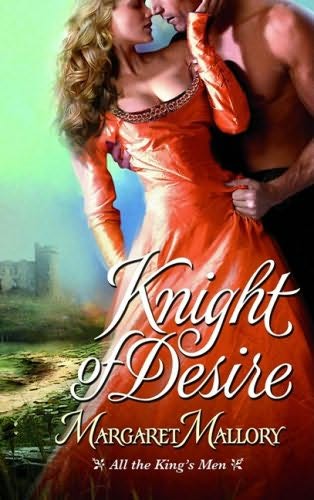
I really enjoyed this first novel in a planned series. I'll read the others when they become available. Here is a review I wrote of this novel that appeared in Historical Novels Review:
Knight of Desire, the first novel of a planned series entitled All the King’s Men, is set in England and Wales in 1405. Lady Catherine is left widowed after her traitorous husband, Rayburn, joined the rebel forces against their king, Henry IV. Rayburn’s lands were granted to William FitzAlan, a knight who fought bravely and loyally on the side of the king. When William rides to Ross Castle to claim his reward, which includes Lady Catherine, he is surprised and impressed by her headstrong attitude. Catherine is given the choice to either marry William or go to the Tower. The pair marry within the hour. The rocky beginning to their relationship is caused by the great deal of mistrust that exists between them. William is wary of Catherine because she spied for the king and betrayed her own husband. Catherine cannot fully give her heart to William because of the horrible abuse she met at the hand of Rayburn. Slowly the two learn to trust each other, though each time they move forward in their relationship, an incident happens to set them back again. Knight of Desire is a satisfying love story full of emotion with a bit of danger and plenty of passionate love scenes. An entertaining and satisfying read.
Wednesday, April 21, 2010
J is for James

The Book is Night Women by Marlon James is one of the best books I've read in a long time. I read it for review for Historical Novels Review awhile back. Below is the review:
The Book of Night Women is a beautifully written, sweeping tale of Jamaican slavery set in the early 19th century. The story centers on Lilith, a slave born on the Montpelier Estate, a large sugar plantation, where life is ruled by danger and fear. Lilith comes of age and kills a black slave driver who attempts to rape her. This event marks Lilith from the other slaves who begin to both fear and revere her at the same time for they sense that she possess a dark power hidden within her. A group of closely knit women, who call themselves the Night Women, keep their eye on Lilith and bring her into their secret circle. At their meetings, Lilith learns the group is plotting a slave revolt of massive proportion that involves several plantations. She hesitates to participate, but the Night Women see her as a force that could really help their cause, and Lilith is torn between her feelings.
James portrays his dynamic and flawed characters in a complex, stratified society where many boundaries, some known and some unspoken, exist among slaves and their masters as well as among the slaves themselves. The authentic voice of the narrator, who remains a mystery until the end of the novel, moves the story along at a brisk pace. Strong language abounds, and the entire novel is written in a slave dialect which adds to the story, making it a realistic, engaging read. James portrays the violence as it really was, absolutely horrific, and does not hold back. One of the most satisfying parts of the novel is James’s exploration of the power of love to transform a person and change their thinking. This tale of freedom, hope, survival, and unlikely love is unique and will continue to make readers think. Marlon James is an extremely gifted writer whose next book I eagerly anticipate.
Wednesday, April 14, 2010
I is for I, Elizabeth

Here's a summary from Booklist:
Historian Miles' novel is in the form of a memoir that Elizabeth I is writing near the end of her long and amazing life. Through Elizabeth's eyes, the reader sees the life-and-death court intrigues, the religious conflicts, and the prerogatives as well as the high price of power. In addition to being faithful to historical fact, Miles presents a wealth of colorful detail. The personalitiesElizabeth's father, Henry VIII, her sister, Bloody Mary, her cousin, Mary Queen of Scots, and the restare vividly portrayed, as are the sights, sounds, and smells of the Tudor era. Miles also interprets the inner woman, from the frightened girl called away from the security of her exile at Hatfield to present herself at court, to the mature queen: scholarly, vain, shrewd, deeply attuned to such things as the language of dress, capable of great passion, but learning never to let her passions rule. Miles weaves Elizabeth's passions throughout, as various courtiers attempt to marry her off, and the men she loves betray her, prove inadequate, or must be sacrificed for the political good. Miles answers in her own way the question of whether the Virgin Queen was really a virgin. Despite its length, this convincing novel never falters. Mary Ellen Quinn
Subscribe to:
Posts (Atom)
